An illustrated investigation by William Khury

Who taught us what to believe?

From the world Jesus grew up in to our own, follow the record behind the beliefs that shape what we fear, whom we trust, and what we hope happens after we die.

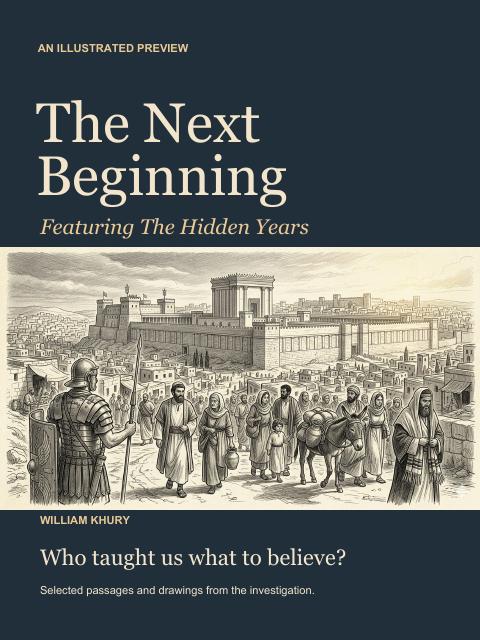
Six illustrated pages with two excerpts.

The illustrated sampler cover, featuring a drawing of ancient Jerusalem.
The illustrated sampler · Free PDF
The research behind the book

On the shoulders of giants.

From the Pyramid Texts to the present, William Khury follows how beliefs took shape, who carried them forward, and how they still affect whom we trust, fear, and welcome.

44original works
525pages in the print edition
Approximately 5,000years on the master timeline
Explore the timeline

Scholars cited in the book

These are five of the scholars William Khury draws on. See the work each is known for and the question it helped the book investigate.

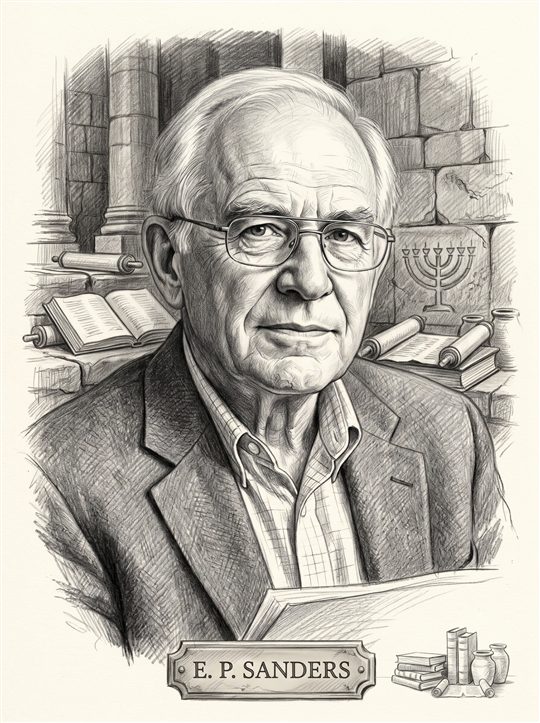
E. P. Sanders

In The Historical Figure of Jesus, Sanders set Jesus in the Jewish religious and political world of his own time.

In The Hidden Years His research helps frame what people in Jesus’s lifetime meant by a messiah and what they expected one to do.

Sanders on Jesus in historical context

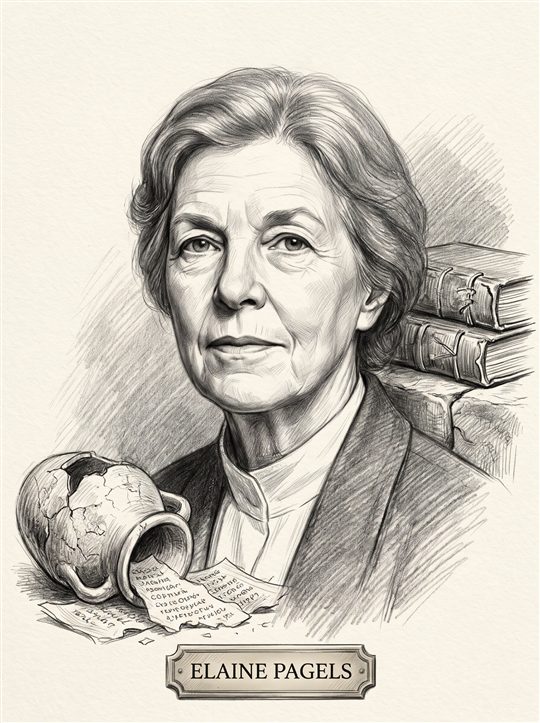
Elaine Pagels

The Gnostic Gospels brought the writings found at Nag Hammadi and the diversity of early Christianity to a wide readership.

In The Hidden Years Khury cites her work to examine why some early Christians saw women’s authority as a mark of heresy.

Pagels’s work at Princeton

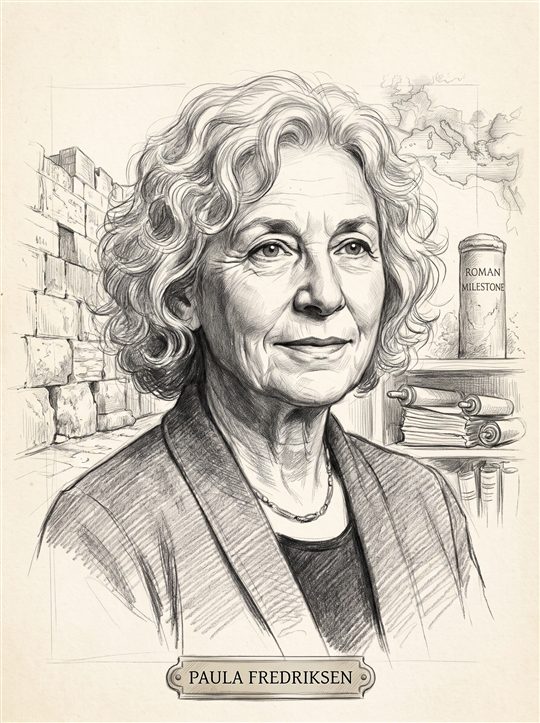
Paula Fredriksen

Jesus of Nazareth, King of the Jews places Jesus and the first Christians in the Jewish and Roman worlds they inhabited.

In The Hidden Years Her work is one of the sources for Khury’s short account of what historians can establish about Jesus’s life and execution.

Fredriksen’s work at Boston University

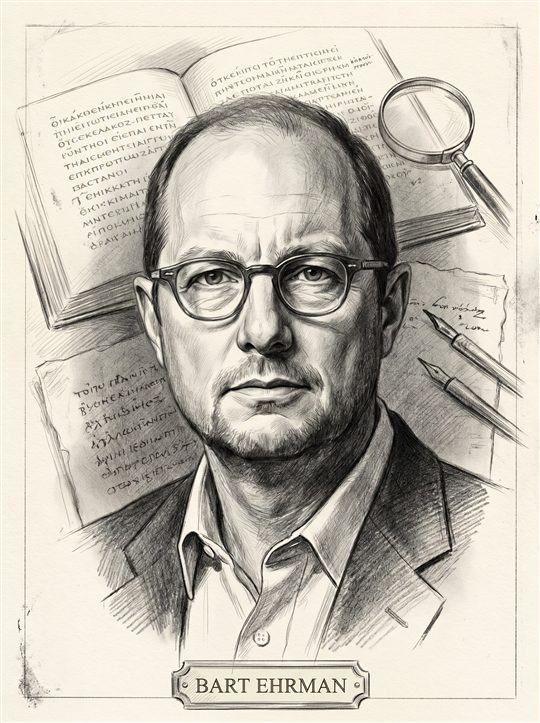
Bart D. Ehrman

In Heaven and Hell, Ehrman traces how ideas about reward and punishment after death changed in antiquity.

In The Hidden Years The book draws on his work to ask when eternal punishment took the form many Christians inherit today.

Ehrman on the history of the afterlife

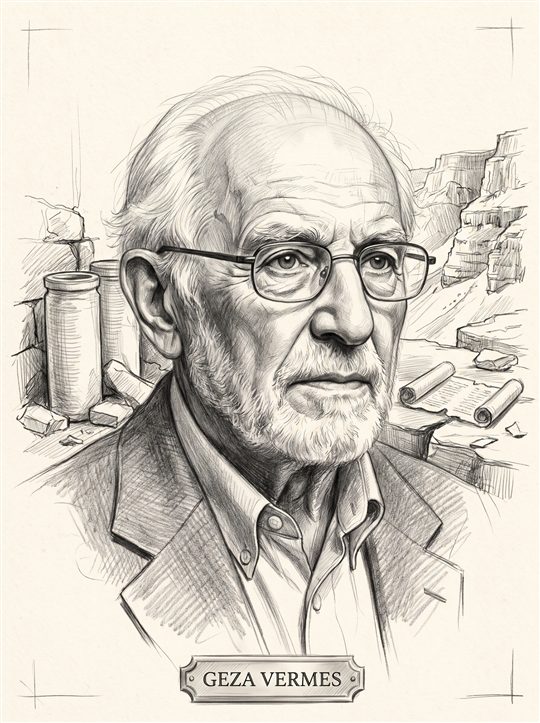
Geza Vermes

Vermes’s English translation of the Dead Sea Scrolls made the ancient manuscripts accessible to generations of readers.

In The Hidden Years Khury uses his translation of the Community Rule to examine what life was like in the community associated with the scrolls.

Vermes’s translation of the scrolls

William Khury · About the author

The faith I inherited. The questions I want my children to ask.

I grew up Orthodox, the son of a Palestinian father and an Iraqi mother, both refugees. My grandmother still speaks Aramaic, a language Jesus spoke. My great-grandfather served as a priest in Jerusalem around the 1920s. I was raised to believe that the church I knew had stayed close to what Jesus taught.

Then I began reading the texts and tracing the arguments over who had the authority to interpret them. I kept coming back to one question. When a teaching governs how I live or whom I fear, how can I tell whether it comes from Jesus or from the people who spoke in his name centuries later?

“I built this series for my three children.” From the foreword

Jerusalem brings that question close. The Western Wall, the Church of the Holy Sepulchre, and Al-Aqsa stand within walking distance of one another. Today I look at my children’s world and ask what follows Generation Z. Are we nearing the end of an era shaped by the story of Jesus? And if we are, what could we carry into the next beginning?
William Khury’s illustration of ancient manuscripts and strands of light converging above a writer at his desk.